
Tutankhamun: The Legacy of the Boy King

Tutankhamun, often referred to as King Tut, was one of the most significant pharaohs in ancient Egyptian history. Ascending to the throne at a mere nine years old, his reign was marked by a return to traditional polytheism following a period of religious upheaval. Despite his short life and rule, Tutankhamun’s legacy has captivated historians, archaeologists, and the public alike, largely due to the discovery of his nearly intact tomb in 1922 by Howard Carter. This article delves into Tutankhamun’s life, achievements, and the treasures found within his tomb, shedding light on why this young pharaoh remains a prominent figure in both history and popular culture.
Who was Tutankhamun?
Tutankhamun was the 12th pharaoh of the 18th Dynasty of ancient Egypt, reigning from approximately 1332 to 1323 BC. He was born around 1341 BC, likely as the son of Akhenaten, the controversial pharaoh who introduced monotheism to Egypt. His mother’s identity remains uncertain, but Tutankhamun ascended to power during a tumultuous period in Egyptian history. His reign, though brief, was pivotal in restoring traditional religious practices that had been disrupted by his father’s radical reforms.
How did Tutankhamun become Pharaoh?
Tutankhamun was crowned pharaoh at a young age, likely as a result of political maneuvering following the death of Akhenaten. The young king initially ruled under the influence of powerful advisors, including General Horemheb and the high priest Ay, who guided him in restoring Egypt’s traditional gods and practices. His return to polytheism was critical for stabilizing the kingdom and reaffirming the pharaoh’s divine role within society.
Reign and Achievements
What do we know about Tutankhamun?
Most of what we know about Tutankhamun comes from the artifacts found in his tomb and historical records. His reign lasted only about ten years, and he is often depicted as a youthful ruler, which has led to a romanticized view of his life and reign.
- Religious Restoration: Tutankhamun moved the capital back to Thebes and reinstated the worship of Amun, the chief deity.
- Cultural Flourishing: His time saw the rejuvenation of the arts and architecture, with many monuments and temples constructed in honor of the gods.
Major reforms during his reign
The young pharaoh’s reign is notable for several key reforms aimed at restoring stability in Egypt:
- Return to Traditional Worship: His decision to worship the god Amun and other traditional deities helped mend the rifts caused by Akhenaten’s monotheistic approach.
- Restoration Projects: Tutankhamun initiated several building projects, including temples and monuments that celebrated the gods and the pharaoh’s divine right to rule.
The significance of his rule in Ancient Egypt
Tutankhamun’s reign, although short, played a crucial role in the transition from the radical changes of Akhenaten back to the traditional polytheistic practices. His rule reinstated the power of the priesthood and emphasized the importance of the pharaoh in maintaining Ma’at, the ancient Egyptian concept of truth, balance, and cosmic order.
The Discovery of the Tomb
Why is Tutankhamun’s tomb so famous?
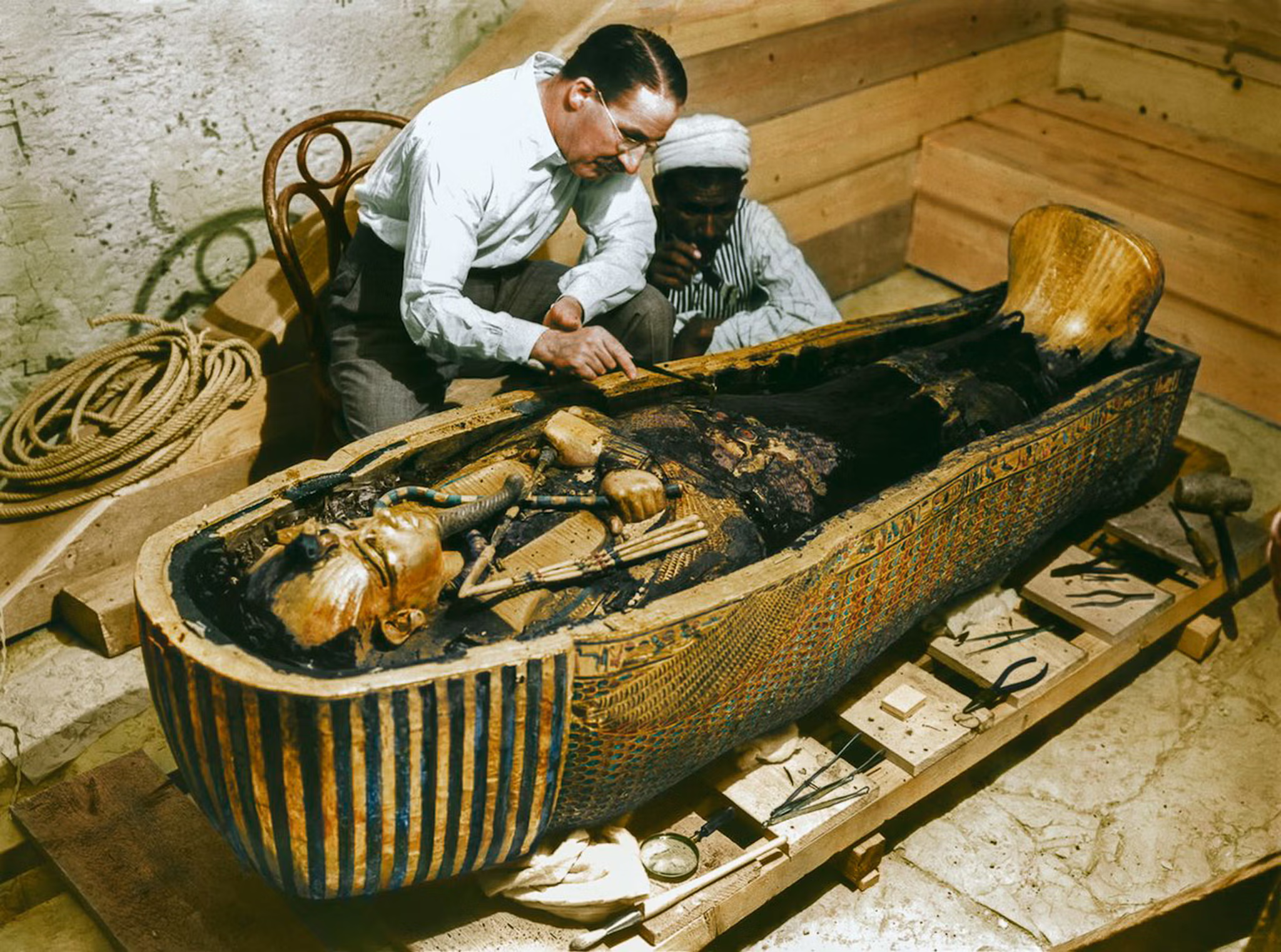
The tomb of Tutankhamun, discovered in 1922, is one of the most significant archaeological finds in history. Unlike many other pharaohs’ tombs, which were plundered or destroyed, Tutankhamun’s tomb was found largely intact, offering an unprecedented glimpse into the burial practices and material culture of ancient Egypt.
- Intact Treasures: Over 5,000 artifacts, including gold jewelry, chariots, and ceremonial items, were found within the tomb.
- Historical Insight: The discovery provided valuable information about the life, death, and burial customs of ancient Egyptian royalty.
What was inside Tutankhamun’s tomb?
The tomb contained a wealth of artifacts that revealed much about the young pharaoh’s life and beliefs. Among the most notable findings were:
Notable artifacts and treasures
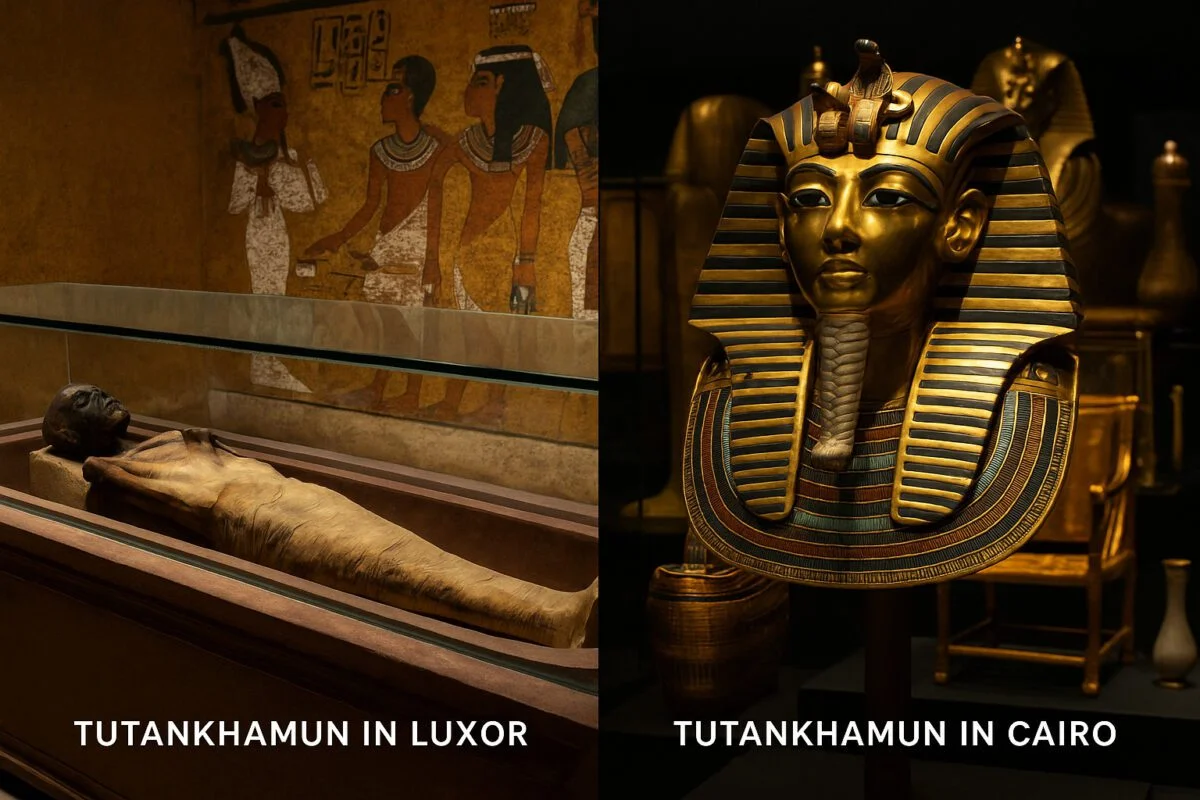
- Golden Death Mask: Perhaps the most iconic artifact, the mask is made of gold and inlaid with semi-precious stones, representing the divine nature of the pharaoh.
- Throne: The ornate throne, decorated with intricate carvings and gold leaf, exemplifies the artistry of the period.
- Chariots: Several chariots were discovered, indicating the importance of this mode of transport in royal life and warfare.
The golden death mask
The golden death mask of Tutankhamun is not only a symbol of ancient Egypt but also a testament to the craftsmanship and artistry of the time. The mask served both practical and symbolic purposes, ensuring that the pharaoh’s spirit would recognize and return to his body in the afterlife.
The Life and Death of Tutankhamun
What did Tutankhamun look like?
Reconstructed images of Tutankhamun suggest he had a youthful, delicate appearance, with characteristic features of the royal lineage. His tomb contained depictions that indicated he had a slight build, and studies of his mummy revealed he suffered from various health issues, including a cleft palate and other ailments.
Theories surrounding his death
The cause of Tutankhamun’s death at the age of 18 remains a topic of debate among historians and archaeologists. Several theories have emerged, including:
- Infection from an Injury: Some researchers believe he died from complications related to a knee injury.
- Malaria: Genetic analysis of his remains has shown traces of malaria, leading some to suggest this as a potential cause of death.
- Genetic Disorders: Inbreeding within the royal family may have contributed to his poor health and early demise.
Tutankhamun in Popular Culture
Famous Pharaohs and their impact
Tutankhamun is often featured alongside other renowned pharaohs, such as Ramses II and Cleopatra. His story has become a symbol of ancient Egypt, representing the mystery and allure of this ancient civilization.
Tutankhamun’s influence on modern media
The fascination with Tutankhamun has permeated various forms of media. Documentaries, movies, and exhibitions continue to explore his life and legacy, captivating audiences worldwide. His tomb has inspired countless books, films, and even theatrical productions, ensuring that his story endures in contemporary culture.
Interactive Learning Activities
Activity 1: Solve the puzzle
Challenge yourself and discover more about Tutankhamun’s life through an engaging puzzle that highlights key events and artifacts.
Activity 2: Quiz – King Tutankhamun
Test your knowledge of Tutankhamun with a fun quiz that covers essential facts about his life, reign, and the treasures found in his tomb.
Activity 3: Make your own Tutankhamun mask
Unleash your creativity by crafting your version of Tutankhamun’s iconic death mask using simple materials.
Activity 4: History Explorer game
Embark on a virtual journey through ancient Egypt, exploring significant sites and learning about the culture that surrounded Tutankhamun.
Frequently Asked Questions
Q1: What is the significance of Tutankhamun today?
Tutankhamun’s significance lies in his role as a symbol of ancient Egyptian culture and history. His tomb’s discovery provided invaluable insights into ancient burial practices and the material wealth of the pharaohs. The artifacts found within have become icons of Egyptology, and his story continues to inspire curiosity and fascination.
Q2: How can you visit Tutankhamun’s artifacts?
Many museums worldwide host traveling exhibitions of Tutankhamun’s artifacts. It’s advisable to check with local museums for upcoming exhibitions and ticket availability. Some artifacts are permanently housed in the Egyptian Museum in Cairo, Egypt, where visitors can view them in detail.
Q3: Did Tutankhamun have any children?
There is no definitive evidence that Tutankhamun had any surviving children. His two daughters, whose mummies were found in his tomb, likely died in infancy. This absence of heirs contributed to the end of his lineage.
Q4: What happened to Tutankhamun’s tomb after its discovery?
After its discovery, Tutankhamun’s tomb became a focal point for archaeological studies and tourism. However, the influx of visitors and the environmental conditions posed threats to the artifacts, leading to preservation efforts that aim to protect these invaluable items.
Q5: Who discovered Tutankhamun’s tomb?
Howard Carter, a British archaeologist, discovered Tutankhamun’s tomb in 1922, marking one of the most significant archaeological finds in history. His meticulous excavation and documentation provided a wealth of information on ancient Egyptian burial practices.
Q6: What other artifacts were found in Tutankhamun’s tomb?
In addition to the famous golden mask, numerous other artifacts were found, including weapons, jewelry, furniture, and everyday items intended to accompany the pharaoh in the afterlife. The sheer volume and quality of these items underscore the wealth and status of Tutankhamun.
Q7: Was Tutankhamun’s death mysterious?
Yes, the circumstances surrounding Tutankhamun’s death remain enigmatic. While some theories suggest an accident or illness, no consensus has been reached. This mystery contributes significantly to his allure as a historical figure.
Q8: How did Tutankhamun’s reign impact ancient Egypt?
Tutankhamun’s reign is significant for its restoration of traditional practices following Akhenaten’s reforms. His efforts helped stabilize Egypt and promote a return to polytheism and cultural richness, setting the stage for future pharaohs.
Q9: Are there any movies or documentaries about Tutankhamun?
Yes, numerous films and documentaries explore the life of Tutankhamun, focusing on his reign, the discovery of his tomb, and the treasures found within. Some popular titles include “The Curse of King Tut’s Tomb” and various BBC documentaries.
Q10: What can we learn from Tutankhamun’s story?
Tutankhamun’s story teaches us about the complexities of ancient societies, the importance of cultural heritage, and the ongoing quest for knowledge. His life and tomb remind us of the enduring fascination with history and the lessons it holds for future generations.
Conclusion
The legacy of Tutankhamun continues to captivate the world, drawing individuals into the mysteries of ancient Egypt. His life, though brief, was filled with remarkable achievements and significant cultural impacts that resonate to this day. As we explore his tomb’s treasures and the stories they tell, we are reminded of the rich history that shaped our understanding of civilization. Engaging with Tutankhamun’s story invites us to appreciate the artistry, spirituality, and complexities of the ancient world, ensuring his legacy endures for generations to come.


