
The Ultimate Guide to Ahmed Ibn Tulun Mosque | Cairo’s Ancient Spiral Wonder

When international travelers explore Cairo, they often lose themselves in the glittering Ottoman style of the Citadel or the massive Mamluk walls of Sultan Hassan. Yet, tucked away in the historic Sayyida Zeinab district lies a sanctuary of peace that predates them all.
The Ahmed Ibn Tulun Mosque is not merely another historic monument; it is the oldest, largest, and most structurally intact Islamic monument surviving in Cairo in its original form. Built over 1,100 years ago, this architectural titan is celebrated globally for its iconic, dreamlike spiral minaret—a structure that looks like it stepped straight out of ancient Mesopotamia.
For cultural explorers and photography enthusiasts seeking an authentic, deeply atmospheric journey into Egypt’s golden age, walking through the sunlit arcades of the Ahmed Ibn Tulun Mosque is an absolute must.
History and Cultural Significance of the Ahmed Ibn Tulun Mosque
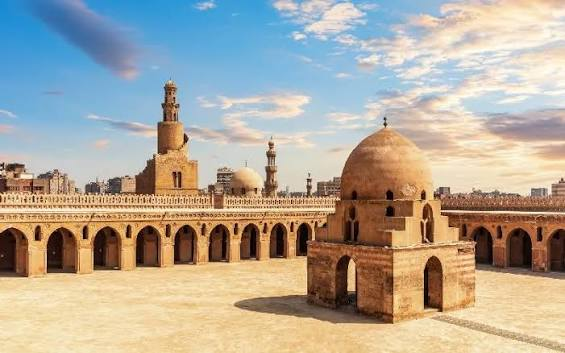
To walk through the Ahmed Ibn Tulun Mosque is to step into the 9th century, an era when Egypt broke away from the central Abbasid Caliphate to form its first independent dynasty. The mosque was commissioned in 876 CE by Ahmed Ibn Tulun, a brilliant and ambitious soldier-statesman born in Babylon (modern-day Iraq) who rose to become the governor, and later the independent ruler, of Egypt.
Ibn Tulun wanted to build a monumental grand mosque that could accommodate his entire imperial army during Friday prayers. According to medieval chronicles, he chose a unique limestone hill known as Gabal Yashkur (The Hill of Thanksgiving). Local legends claimed this was the sacred dry ground where Noah’s Ark safely rested after the Great Deluge, adding an aura of divine blessing to the site of the Ahmed Ibn Tulun Mosque.
The construction took three years of relentless labor and was completed in 879 CE. Ahmed Ibn Tulun deliberately hired a master Christian architect who proposed a genius design using red mud-brick instead of traditional stone columns, ensuring the building could survive catastrophic fires or earthquakes. Centuries later, when the surrounding imperial city of Al-Qata’i was completely burned to the ground by invading armies, only this magnificent mosque survived untouched—a living miracle of structural engineering at the Ahmed Ibn Tulun Mosque that stands proudly to this day.
Architectural Style, Location & How to Get There at the Ahmed Ibn Tulun Mosque
The Ahmed Ibn Tulun Mosque is located in the Sayyida Zeinab neighborhood in Historic Cairo. Spanning a colossal area of approximately 26,300 square meters (nearly 6.5 acres), it is one of the largest mosques in the world by surface area. It is uniquely surrounded by an outer walled courtyard called a Ziyada (an extension), designed to keep the chaotic noise, dust, and bustling markets of the medieval city completely separate from the peaceful prayer halls inside the Ahmed Ibn Tulun Mosque.
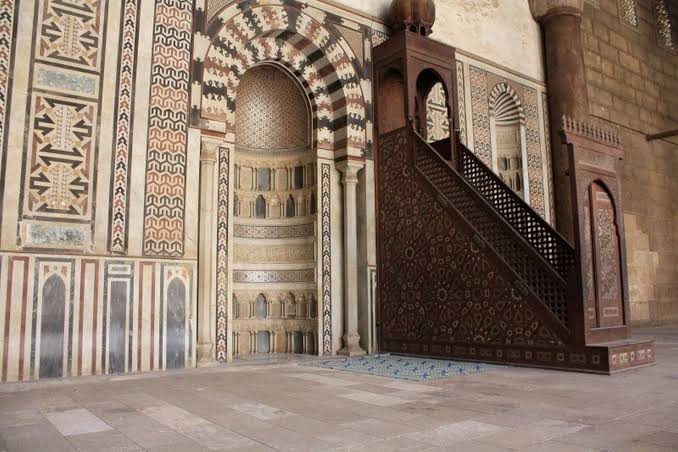
Architecturally, the building is a pure masterpiece of early Islamic and Samarran architecture. Rather than relying on salvaged columns from ancient Roman or Christian ruins like other early mosques, the Ahmed Ibn Tulun Mosque features 160 massive brick piers supporting elegant, pointed arches. This layout marks the very first widespread use of pointed arches in architectural history, centuries before they appeared in the Gothic cathedrals of medieval Europe.
How to Get There:
- Google Maps Link: Easily locate the Ahmed Ibn Tulun Mosque by searching for “Mosque of Ibn Tulun, Cairo” on Google Maps.
- By Rideshare/Taxi: Taking an Uber or a licensed white taxi from downtown Cairo or your hotel directly to the Ahmed Ibn Tulun Mosque is the most stress-free option.
- By Metro: The nearest station to the Ahmed Ibn Tulun Mosque is Sayyida Zeinab (Line 1). From there, you can take a colorful 15-minute walk through the local historic neighborhood or a short 5-minute taxi ride.
Continue Reading: More Egypt Travel Guides :
- Ultimate Guide to Bayt Al Suhaymi, Cairo
- Egypt in the Modern Era | History & Transformations
- The Precinct of Amun-Re: A Deep Dive into Ancient Splendor – Bright Egypt Travel
Inside the Venue: Must-See Highlights & Exhibits at the Ahmed Ibn Tulun Mosque
Stepping inside the massive outer walls of the Ahmed Ibn Tulun Mosque reveals a world of geometric perfection:
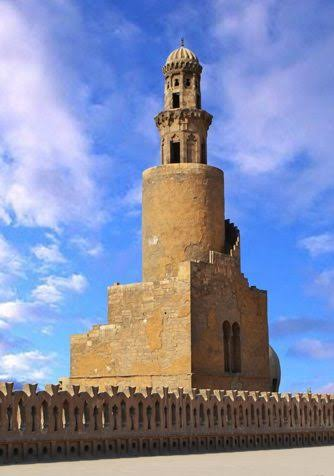
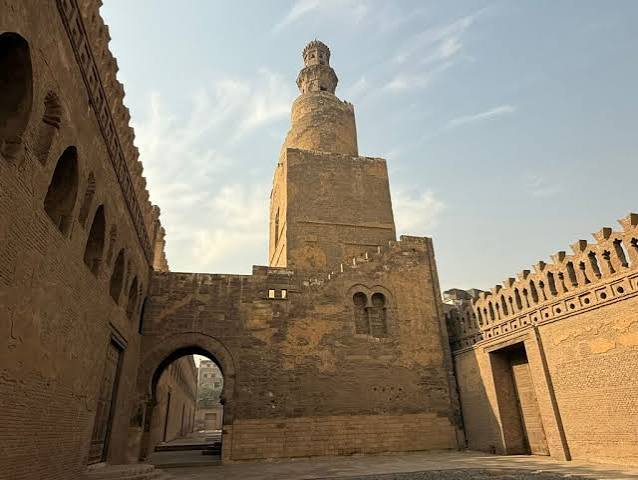
- The Iconic Spiral Minaret The crown jewel of the Ahmed Ibn Tulun Mosque complex is the legendary external minaret. Influenced deeply by the famous Minaret of Samarra in Iraq, it features a unique counter-clockwise exterior helical staircase. Bold travelers can climb up the stone steps to the very top, where you are rewarded with a breathtaking, unobstructed 360-degree panoramic view of Historic Cairo, the Citadel, and on clear days, the distant Pyramids of Giza.
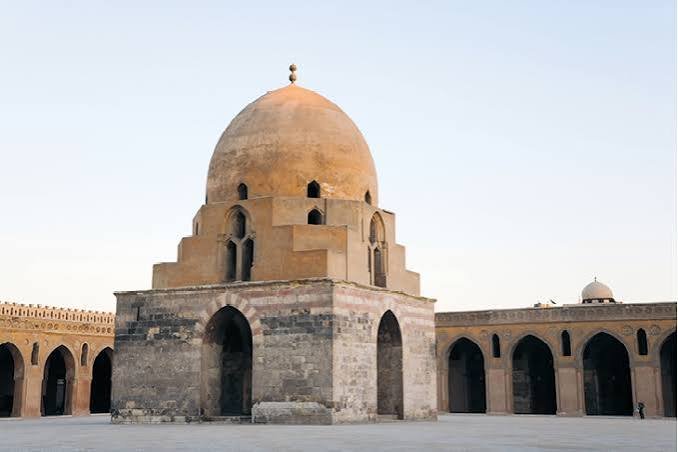
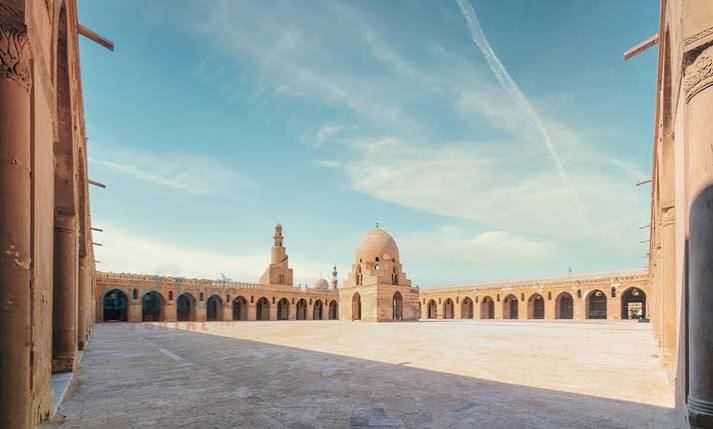
- The Grand Open Courtyard and Fountain At the heart of the Ahmed Ibn Tulun Mosque is a magnificent, square open-air courtyard (Sahn). In its center stands a beautiful, monumental stone ablutions fountain covered by a grand dome, which was added in the 13th century by Sultan Lajin. The symmetry of the vast courtyard set against the blue Egyptian sky is a mesmerizing sight within the Ahmed Ibn Tulun Mosque.
- The Intricate Stucco Arcades and Windows Surrounding the courtyard of the Ahmed Ibn Tulun Mosque on all four sides are deep, shaded porticoes (Riwags). If you look closely at the upper walls, you will notice 128 unique, open-work stucco windows. Each window features an entirely different geometric or floral open-work design, casting beautiful, dancing patterns of light and shadow along the corridors.
- The Gayer-Anderson Museum (The Ottoman Houses) Built directly against the outer walls of the Ahmed Ibn Tulun Mosque are two stunning 16th and 17th-century historic residences. Today, they form the famous Gayer-Anderson Museum, named after a British major who filled the rooms with a world-class private collection of oriental furniture, carpets, and art. Fun Fact for film buffs: This beautiful house next to the Ahmed Ibn Tulun Mosque was a prominent filming location for the James Bond classic movie, “The Spy Who Loved Me.”
Smart Traveler Guide: Opening Hours & Tickets for the Ahmed Ibn Tulun Mosque
- Opening Hours: Open daily from 8:00 AM to 5:00 PM at the Ahmed Ibn Tulun Mosque.
- Best Time to Visit: Arrive at 4:00 PM at the Ahmed Ibn Tulun Mosque to enjoy the stunning “Golden Hour.” Watch the sunset paint the ancient mud-brick walls in deep shades of amber and gold, creating an unforgettable atmosphere for photography.
Ticket Prices & Discounts:
- Mosque Admission: Free for all international visitors entering the Ahmed Ibn Tulun Mosque. (A small, optional tip is customary for the local site attendants who help guide you up the minaret).
- Gayer-Anderson Museum Ticket (Optional): 100 EGP (Approx. €2.00 – €3.00) for international adults; 50 EGP for accredited students.
Visitor Guidelines, Etiquette & Safety at the Ahmed Ibn Tulun Mosque
- Dress Code: Modest attire is required at the Ahmed Ibn Tulun Mosque. Both men and women should have their shoulders and knees fully covered. Women are advised to bring a light scarf to wrap around their hair if entering the main indoor prayer niches.
- Footwear: Shoes must be removed before walking onto the covered carpets of the main prayer hall inside the Ahmed Ibn Tulun Mosque. Plastic shoe covers are often provided at the entrance for a small tip, or you can simply carry them in a daypack.
- Photography Rules: Photography for personal use is fully permitted and free throughout the Ahmed Ibn Tulun Mosque. No flash photography is allowed inside the Gayer-Anderson museum rooms to protect the ancient fabrics. Be careful when climbing the minaret stairs, as there are no exterior handrails on the upper sections.
- Prohibited Items: Large luggage, commercial drone equipment, and open food products are strictly banned inside the historic perimeter of the Ahmed Ibn Tulun Mosque.
- Emergency Procedures: The Ahmed Ibn Tulun Mosque complex is actively patrolled by tourism police. First-aid points are accessible near the main administrative entrance.
Your Next Egyptian Adventure Starts Here :
- Ultimate Guide to Luxor attractions 2026
- Mövenpick SS Misr Nile Cruise: Ultimate Royal Luxury Guide
Monument Services & Amenities at the Ahmed Ibn Tulun Mosque
- Clean Facilities: Restrooms are available within the Ahmed Ibn Tulun Mosque complex area near the main entrance gates.
- Gift Shop & Crafts: A small selection of souvenir stalls and local guidebooks can be found near the ticket kiosk of the adjacent Gayer-Anderson Museum right outside the Ahmed Ibn Tulun Mosque.
- Parking: Limited street parking is available outside the Ahmed Ibn Tulun Mosque. It is highly recommended to arrive via a pre-booked private transfer or taxi to avoid traffic hassles.
- Cafes: Traditional local Egyptian coffee shops are located just outside the quiet alleys of the Ahmed Ibn Tulun Mosque, offering authentic mint tea and cold refreshments.
- Accessibility for People of Determination: The vast central courtyard of the Ahmed Ibn Tulun Mosque is completely flat and wheelchair accessible. However, the historic spiral minaret and the multi-story Gayer-Anderson museum feature steep, narrow stairs that are not accessible for mobility devices.
Insider Tips from Bright Egypt Travel for the Ahmed Ibn Tulun Mosque
- The Shadow Play: Walk down the shaded porticoes in the late afternoon at the Ahmed Ibn Tulun Mosque. The unique pointed arches create a rhythmic series of shadows that are a dream come true for minimalist and architectural photographers.
- The Wooden Quranic Frieze: Look up at the wooden planks running just below the ceiling of the arcades inside the Ahmed Ibn Tulun Mosque. This is an ancient sycamore-wood frieze carved with verses of the Quran that stretches for over two kilometers around the entire mosque!
Perfect Day Itinerary: What to Do Nearby the Ahmed Ibn Tulun Mosque
Make the most of your historic journey with this curated, full-day cultural plan starting from the Ahmed Ibn Tulun Mosque:
- Morning (9:00 AM – 11:30 AM): Explore the vast Ahmed Ibn Tulun Mosque and climb the spiral minaret. Right after, step directly next door into the enchanting Gayer-Anderson Museum to experience elite Ottoman-era Cairo living.
- Midday (12:00 PM – 2:00 PM): Take a short 10-minute drive from the Ahmed Ibn Tulun Mosque to the National Museum of Egyptian Civilization (NMEC) to view the famous Royal Mummies.
- Late Afternoon: Immerse yourself in the bustling scents and colors of the historic Khan el-Khalili Bazaar for souvenir shopping and dinner after visiting the Ahmed Ibn Tulun Mosque.
Book Your Immersive Cairo Adventure Today at the Ahmed Ibn Tulun Mosque
True travel is about discovering the hidden gems that casual tourists pass by. Standing in the quiet, monumental courtyard of the Ahmed Ibn Tulun Mosque offers a rare sense of peace and historical wonder that you will cherish forever.
At Bright Egypt Travel, we specialize in taking you beyond the typical resort paths to experience the raw, authentic majesty of Egypt’s deep heritage. From arranging premium, air-conditioned private vehicles to pairing you with passionate, expert Egyptologist guides, we curate every step of your journey to the Ahmed Ibn Tulun Mosque with meticulous care.
- Book Your Premium Guided Tour Now: +201032707611
- Contact via WhatsApp: Connect directly with Bright Egypt Travel today and turn your Cairo travel dreams into reality while visiting the Ahmed Ibn Tulun Mosque!


