
The Ultimate Guide to Ibn Tulun Mosque and Gayer-Anderson MuseumCairo’s Treasures of Architectural Majesty and Oriental Legend

For international travelers searching for the absolute pinnacle of architectural purity, spiritual stillness, and enchanting oriental romance, Cairo holds a majestic secret just off the beaten tourist paths. Standing proudly side-by-side in the historic Sayeda Zeinab district are two of Egypt’s most spectacular cultural monuments: The Mosque of Ahmad Ibn Tulun and the adjacent Gayer-Anderson Museum (The House of the Cretan Woman).
As the oldest surviving mosque in Egypt preserved fully in its original geometric form, Ibn Tulun dazzles visitors with its sweeping courtyard and iconic spiral minaret. Directly connected to its outer walls sits the Gayer-Anderson Museum, a labyrinthine pair of 17th-century Ottoman-era domestic residences filled with rare global antiques, secret passages, and mystical local folklore. Together, these two landmarks offer a profoundly immersive journey into the grand history and artistic soul of medieval Cairo.
For architecture purists, photography enthusiasts, and cultural explorers seeking to experience Cairo’s most atmospheric, historic, and visually striking compound, a dedicated visit to Ibn Tulun and Gayer-Anderson is an irreplaceable centerpiece of any premium Egyptian holiday.
History and Cultural Significance the Ahmad Ibn Tulun & Gayer-Anderson Museum
The stories of these two interconnected structures span across completely different, fascinating golden eras of Egyptian history.
The Mosque of Ahmad Ibn Tulun
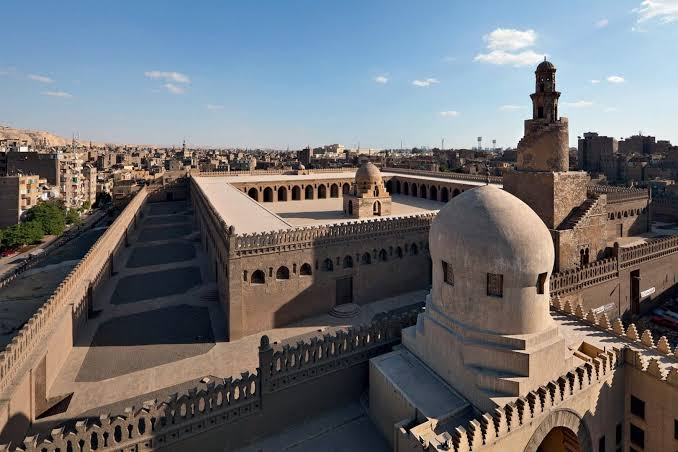
Commissioned by the founder of the Tulunid Dynasty, Ahmad Ibn Tulun, and completed in 879 AD, this grand mosque was designed to serve as the structural anchor of his new royal capital, Al-Qata’i. Built entirely of red mudbrick on a small rocky outcrop known as the “Hill of Thanksgiving,” local legends claim this was the sacred dry land where Noah’s Ark safely rested after the global flood. Its design represents the height of early Islamic structural purity, surviving pristine and untouched for over 1,140 years.
The Gayer-Anderson Museum (Beit Al-Kritliya)
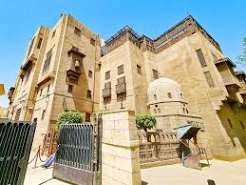
This spectacular museum comprises two distinct historic mansions: Beit Amna bint Salim (built in 1540) and Beit Al-Kritliya (built in 1631) during the Ottoman Era. In 1935, a brilliant, eccentric British military physician and passionate orientalist named Major Robert Grenville Gayer-Anderson received official permission from the Egyptian government to inhabit the interconnected houses.
In exchange, he spent years meticulously restoring the grand structures and filling their rooms with an extraordinary, world-class collection of pharaonic artifacts, historic oriental furniture, rare carpets, and global artworks. Upon his departure in 1942, he gifted the entire house and its treasures back to the Egyptian people, creating one of the world’s finest museums of domestic Islamic life.
Architectural Style, Location & How to Get There the Ahmad Ibn Tulun & Gayer-Anderson Museum
This historic architectural compound is located beautifully in the Sayeda Zeinab neighborhood of Islamic Cairo, situated gracefully southwest of the Citadel of Saladin.
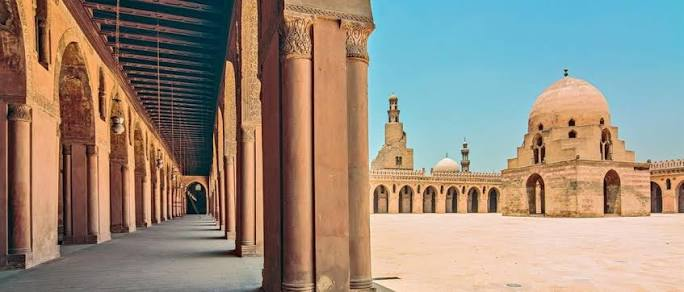
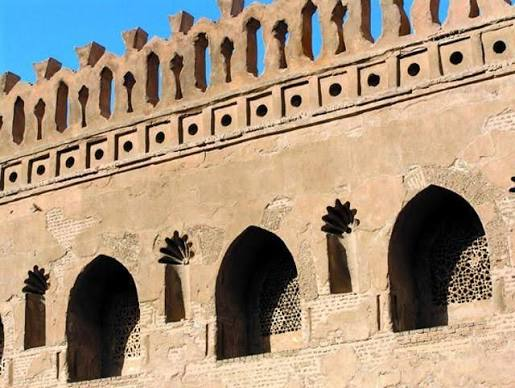
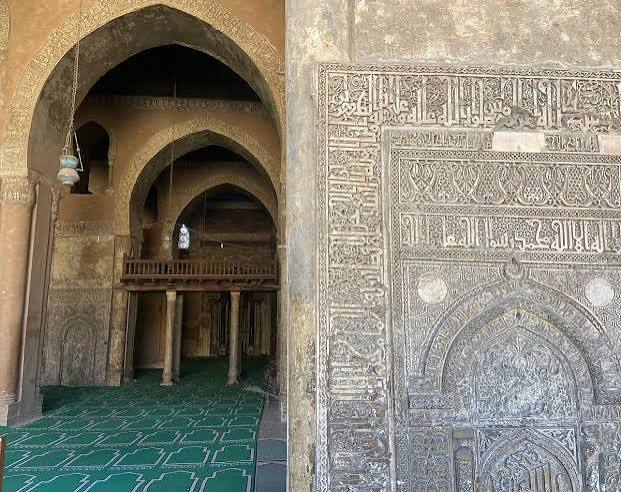
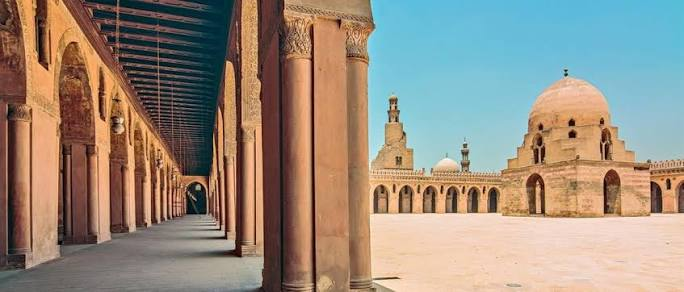
Architecturally, Ibn Tulun Mosque is globally celebrated for its magnificent Samarran-influenced design, featuring the only external spiral minaret in Egypt. The mosque uses structural pointed arches—predating European Gothic architecture by centuries—and is encircled by a unique outer courtyard (ziyada) designed to isolate the sacred prayer hall from the noisy secular markets outside.
The Gayer-Anderson Museum is the ultimate masterwork of Cairene domestic Ottoman architecture, constructed of fine limestone blocks and decorated with magnificent, overhanging carved wooden mashrabiya windows, central open-air fountains, and panoramic rooftop loggias.
How to Get There:
- Google Maps Link: Pinpoint the perfect start of your tour by searching for “Mosque of Ibn Tulun, Cairo” or “Gayer-Anderson Museum, Cairo” on Google Maps.
- By Metro: Take Line 1 directly to the Sayeda Zeinab Metro Station. From the station, you can enjoy a highly authentic, lively 15-minute walk through the local neighborhood markets directly up to the hill of the mosque.
- By Rideshare/Taxi: Book an Uber or hail a standard white taxi, setting the destination drop-off point directly to the Main Entrance Plaza of the Gayer-Anderson Museum. The drop-off area features a wide, secure public cobblestone plaza that serves as the ideal starting location.
Inside the Compound: Must-See Highlights & Masterworks
This monumental compound houses an incredible wealth of visual, spiritual, and cinematic wonders. Make sure to experience these world-class highlights:
1. The Iconic Spiral Minaret (Ibn Tulun)
The absolute signature of the Cairo skyline. Visitors can walk up the historic external stone steps of this spiral minaret. Reaching the top tier rewards you with a jaw-dropping, panoramic 360-degree view of the massive mosque courtyard below, the Citadel of Saladin, and the vast expanse of historic Cairo.
2. The Magnificent Central Fountain Courtyard
Ibn Tulun’s main courtyard is a vast, perfectly square space measuring 92 meters on each side. At its center stands a beautiful, monumental domed ablution fountain added in the 13th century by Sultan Lajin, surrounded by arcades of beautifully carved stuccowork rosettes.
3. The Grand Celebration Hall (Gayer-Anderson)
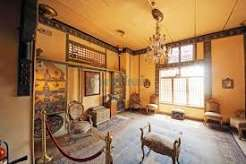
The majestic reception room (qa’a) of the house features soaring ceilings, a central sunken marble fountain, and exquisite, gold-leaf painted wooden ceiling beams. This spectacular room is famous globally as a primary filming location for the 1977 James Bond classic movie, The Spy Who Loved Me.
4. The Damascus Room & The Harem Room
Inside Gayer-Anderson’s house, explore the breathtaking Damascus Room, which was imported fully intact from Syria, featuring walls lined with exquisite painted wood and lacquer. Nearby, the Harem Room showcases stunning carved wooden mashrabiya screens that allowed the women of the house to look down at the grand parties completely unseen.
5. The Magic Well and Local Legends
Located in the central courtyard of the house is the legendary “Well of the Cretan Woman.” Local folklore claims that the well contains magical waters that can reveal your true love, and that the house itself is protected by a benevolent mythical king (Jinn).
Smart Traveler Guide: Opening Hours & Tickets the Ahmad Ibn Tulun & Gayer-Anderson Museum
- Opening Hours: Both Ibn Tulun Mosque and the Gayer-Anderson Museum operate daily from 9:00 AM to 5:00 PM.
- Best Time to Visit: We highly recommend arriving at 9:30 AM to explore the interior rooms of the Gayer-Anderson Museum while the morning sun beams softly through the stained glass windows, then entering the vast open-air courtyard of Ibn Tulun at 11:30 AM for incredible photography.
Entry Fees & Pricing:
- The Mosque of Ahmad Ibn Tulun: 100% Free of Charge! There is no ticket required to enter the historic mosque or climb the spiral minaret (a small tip for the shoe handlers at the entrance gate is customary, approx. 20-50 EGP).
- Gayer-Anderson Museum Tickets: (Available at the gate kiosk via credit card)
- International Adults: Approx. 100 – 120 EGP (Approx. €2.00 – €2.50).
- International Students: Approx. 50 – 60 EGP.
- Camera Fee (Professional DSLR): Requires a small separate ticket at the kiosk. Smartphone photography is completely free!
Visitor Guidelines, Etiquette & Safety the Ahmad Ibn Tulun & Gayer-Anderson Museum
- Dress Code & Footwear: Modest, respectful clothing is required across the entire compound. Men and women must have their shoulders and knees fully covered. Women should bring a light headscarf out of respect for entering the prayer hall of Ibn Tulun. You will be required to remove your shoes or wear protective fabric shoe covers at the mosque entrance.
- Photography Rules: Photography via smartphones for personal memories is fully permitted, highly encouraged, and completely free throughout the mosque, minaret, and museum rooms. The use of professional DSLR tripods or commercial drone equipment requires official ministerial security permits.
- Safety & Security: The entire Ibn Tulun and Gayer-Anderson compound is a highly secure, peaceful cultural enclave. It features a continuous presence of dedicated Tourism and Antiquities Police, gated checkpoints, and highly professional museum curators inside every room, providing an exceptionally safe and relaxed experience for families and solo travelers.
District Services & Amenities the Ahmad Ibn Tulun & Gayer-Anderson Museum
- Shopping & Souvenirs: While the immediate vicinity is an authentic residential area rather than a tourist bazaar, the museum gift shop offers wonderful historical books, architectural guides, and high-quality replicas of Major Gayer-Anderson’s private art collections.
- Parking: Because the surrounding Sayeda Zeinab district features dense, historic streets, on-street parking can be very difficult. Visitors utilizing private transport or luxury tours should utilize the secure parking spaces right outside the Main Museum Gate Plaza or use the valet services of nearby luxury tourist vehicles.
- Cafes & Dining: After your tour, you can enjoy traditional Egyptian tea and refreshments at the local street cafes facing the mosque plaza, or take a short 10-minute drive to the nearby Al-Azhar Park or Downtown Cairo for premium fine-dining options.
- Accessibility for People of Determination: The main open-air courtyard of Ibn Tulun Mosque is fully flat, spacious, and highly accessible for wheelchair users. However, climbing the spiral minaret requires steep outdoor stone steps, and navigating the Gayer-Anderson Museum requires climbing narrow, historic wooden staircases across multiple floors.
Insider Tips from Bright Egypt Travel
- The Mashrabiya Spy Secret: While standing inside the Harem Room of the Gayer-Anderson Museum, look closely through the carved wooden mashrabiya windows. They are engineered perfectly so that you can see the entire courtyard outside with absolute clarity, while anyone standing in the courtyard looking up sees only complete darkness!
- Look for Noah’s Frieze: Look closely at the stunning wooden calligraphic panels running along the entire upper rim of Ibn Tulun’s prayer hall. Carved entirely out of precious sycamore wood, these ancient inscriptions contain over one-fifth of the entire Holy Quran!
Perfect Day Itinerary: What to Do Nearby
Experience the ultimate journey through architecture and mystery with this perfectly timed historic plan:
- Morning (9:30 AM – 11:30 AM): Start by immersing yourself in the artistic wonders, secret rooms, and James Bond history of the Gayer-Anderson Museum.
- Midday (11:45 AM – 1:15 PM): Walk right next door into the awe-inspiring, peaceful courtyard of The Mosque of Ahmad Ibn Tulun, and climb the iconic spiral minaret for the finest view of old Cairo.
- Afternoon (1:30 PM – 3:30 PM): Take a short private transfer to the nearby Sultan Hassan and Al-Rifa’i Mosques to complete your premium architectural tour of the capital’s finest historic monuments.
Book Your Luxury Historic Adventure Today
A trip through historic Cairo achieves its truest, most poetic expression when standing in the silent, sunlit expanse of Ibn Tulun Mosque, or looking through the wooden mashrabiyas of the Gayer-Anderson house. These are the moments where history ceases to be a textbook and becomes a sensory, living experience.
At Bright Egypt Travel, we specialize in transforming cultural sightseeing into deeply memorable, premium private journeys. From managing all your luxury transfers in absolute comfort to pairing you with passionate expert guides, we orchestrate the details so you can enjoy the pure magic.
- Book Your Premium Guided Architectural Compound Tour Now: +201032707611
- Contact via WhatsApp: Connect directly with Bright Egypt Travel today and elevate your Cairo holiday to the height of luxury!


