
Abu Simbel: The Eternal Pride of Ramses II and a Miracle of Modern Engineering

Have you ever wondered what it takes for a monument to defy both time and the rising tide of a massive river? Standing on the banks of Lake Nasser, the Abu Simbel Temples are not just relics of a bygone era; they are a testament to human ego, divine devotion, and an unprecedented global rescue mission. Whether you are a history buff, an architecture enthusiast, or a traveler planning your next Egyptian adventure, this guide dives deep into the heart of Nubia to explore why these temples remain the “Crown Jewel” of ancient civilization.
1. Introduction & Historical Context
The Crown Jewel of Nubia
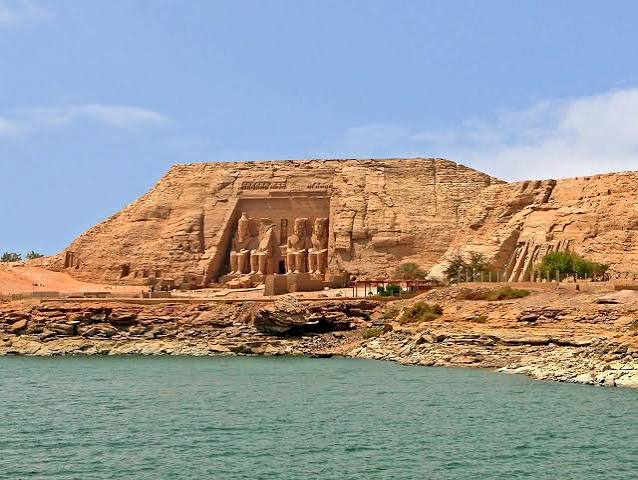
Abu Simbel is more than a tourist stop; it is a masterpiece of rock-cut architecture. Carved directly into a sandstone cliff in the 13th century BCE, the twin temples serve as a permanent boundary marker of the Egyptian Empire’s southern reach. Their sheer scale was designed to leave any visitor friend or foe in absolute awe.
The Legacy of Ramses II
To understand Abu Simbel, you must understand Ramses the Great. Reigning for over 60 years, Ramses II was a master of self-promotion. He didn’t just build temples; he built a legacy. Abu Simbel was commissioned to celebrate his victory at the Battle of Kadesh and to solidify his status as a “Living God.”
Strategic Location: Why Nubia?
Why build such a massive complex so far from the capital of Thebes? The location was a strategic power move. By placing these colossal structures in the heart of Nubia, Ramses II signaled to the gold-rich southern territories that the Pharaoh’s power was absolute, divine, and unshakeable.
Continue Reading: More Egypt Travel Guides :
- Karnak Temple: A Journey Through Ancient Egypt’s Greatest Religious Complex – Bright Egypt Travel
- Siwa Oasis Travel Guide| History & Desert Wonders

2. Architectural Marvels: A Journey Inside
The Great Temple of Ramses II
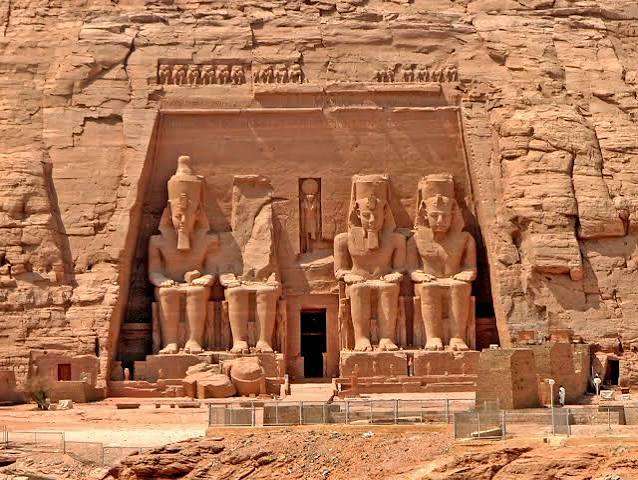
The façade of the Great Temple is dominated by four colossal seated statues of Ramses II, each standing 20 meters high. Even after one statue was damaged by an ancient earthquake, the remaining figures radiate an aura of eternal authority.
Abu Simbel Temples Inside: The Sacred Chambers
Step through the entrance, and you are greeted by the Hypostyle Hall. Eight massive pillars, carved in the form of Ramses as the god Osiris, line the way.
- The Walls: Look closely at the reliefs depicting the Battle of Kadesh. You can see the Pharaoh in his chariot, bow drawn, capturing the chaos of ancient warfare with startling detail.
- The Sanctuary: At the very back lies the “Holy of Holies,” where statues of Ra-Horakhty, Amun-Ra, Ptah, and the deified Ramses II sit in perpetual silence.
The Temple of Nefertari
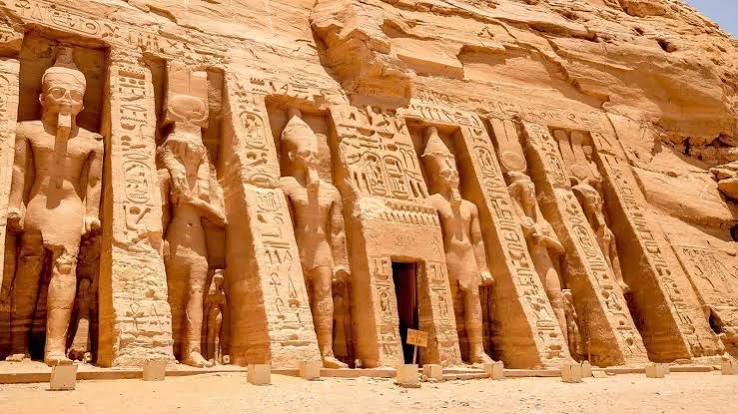
A short walk away lies the Small Temple. What makes this “Abu Simbel temple fact” so unique is that Ramses II depicted his beloved Queen, Nefertari, at the same height as himself. In Egyptian art, queens were usually shown only reaching the Pharaoh’s knees. This temple, dedicated to the Goddess Hathor, is a rare ancient monument to romantic and political partnership.
3. Astronomical Brilliance: The Solar Alignment
The Solar Alignment Phenomenon
Ancient Egyptian engineers were masters of “Archaeoastronomy.” They designed the Great Temple so that twice a year, the sun’s rays would penetrate 60 meters deep into the mountain.
Dates of Destiny
- February 22nd: Marking the King’s coronation.
- October 22nd: Marking the King’s birth.
On these mornings, the sun illuminates the faces of Amun-Ra, Ramses II, and Ra-Horakhty. Interestingly, Ptah the god of the underworld, remains forever in the shadows, a deliberate architectural choice.
4. The Miracle of Modern Engineering (The UNESCO Rescue)
The Threat of the High Dam
In the 1960s, the construction of the Aswan High Dam threatened to submerge Abu Simbel forever beneath the waters of Lake Nasser. The world faced a choice: progress or history?
Abu Simbel Relocation: A Global Effort
Between 1964 and 1968, in a feat of engineering as impressive as the original construction, UNESCO led a multi-national team to save the temples.
- The Process: The temples were meticulously cut into 1,035 blocks (some weighing 30 tons).
- The Move: They were transported to a location 65 meters higher and 200 meters further back from the water.
- The Result: A massive man-made concrete dome was built to mimic the original mountain, preserving the site for future generations.
5. Visitor Experience & Tourism
How to Get There: Travel Logistics
Most travelers reach Abu Simbel from Aswan.
- By Air: A short 45-minute flight offers a stunning bird’s-eye view of the desert.
- By Road: A 3-hour drive through the Sahara is the most common route, often departing at dawn to catch the sunrise.
Abu Simbel Temples Reviews & Tips
- The Sound and Light Show: Don’t miss the evening performance. It uses projections to tell the story of the relocation and Ramses’ reign against the backdrop of the illuminated statues.
- Best Time to Visit: To avoid the 40°C heat, visit between October and April. If you want to witness the Solar Festival, plan months in advance, as crowds are immense.
Your Next Egyptian Adventure Starts Here :
- Where Is Egypt Located? Geography, Map & Travel Facts
- Where Are the Pyramids in Egypt? A Traveler’s Guide
- Luxor Temple: A Journey Through Time – Bright Egypt Travel
6. A Symbol of Resilience
Abu Simbel is a bridge between the ancient world’s ambition and the modern world’s technological capability. It stands as a reminder that while empires fall, the art and stories we create can endure, if we are willing to work together to save them.
Ready to walk in the footsteps of the Pharaohs? If you found this guide helpful, share it with your fellow travelers and let us know in the comments: Which part of Abu Simbel fascinates you more, the ancient construction or the modern-day rescue?


