
Queen Cleopatra VII: History, Legacy & Last Pharaoh

Queen Cleopatra of Egypt remains one of the most enigmatic and captivating figures in history. Known for her intelligence, political acumen, and dramatic relationships with powerful Roman leaders, Cleopatra’s reign marked the end of the Ptolemaic dynasty and a pivotal point in ancient history. She was not only the last Pharaoh of Egypt but also a woman of remarkable ambition who sought to restore Egypt’s glory amidst the shadow of Rome. This article delves into her life, her rise to power, and the tumultuous events that led to her tragic downfall, providing a comprehensive overview of her extraordinary legacy.
Historical Context
The Greco-Roman Period
The era in which Cleopatra ruled was characterized by the rise of Roman power and the decline of Hellenistic kingdoms. The Greco-Roman period marked a significant cultural exchange, where Greek culture influenced Roman art, literature, and philosophy. Cleopatra’s Egypt was a melting pot of these influences, as she sought to navigate the complex political landscape of her time.
The Ptolemaic Dynasty
The Ptolemaic dynasty was established in the wake of Alexander the Great’s conquests, founded by his general Ptolemy I. The dynasty was known for its blend of Greek and Egyptian cultures. Cleopatra VII, born in 69 BC, was the last ruler of this dynasty and the first to learn the Egyptian language, reflecting her desire to connect with her subjects. Her reign began in a turbulent political climate, setting the stage for her remarkable story.

Early Life and Background
Birth and Family
Cleopatra was born in Alexandria, a city that was a hub of learning and culture in the ancient world. She was the daughter of Ptolemy XII Auletes, a king whose reign was marked by instability. Cleopatra had several siblings, including her brothers Ptolemy XIII and Ptolemy XIV, and her sister Arsinoe IV. The Ptolemaic family was known for its tradition of sibling marriages, which aimed to maintain the royal bloodline.
Education and Skills
From a young age, Cleopatra was exposed to the rich intellectual environment of Alexandria. She received a comprehensive education in various subjects, including mathematics, philosophy, and astronomy. Cleopatra was fluent in multiple languages, including Greek, Egyptian, and Latin, allowing her to engage with diverse cultures and political entities. Her education and eloquence were crucial in her political maneuvers later in life.
Rise to Power
Ascension to the Throne
Cleopatra ascended to the throne at the age of 18, co-ruling with her younger brother Ptolemy XIII. Their early reign was fraught with power struggles, as Cleopatra sought to consolidate her position against her brother’s ambitions. This internal strife led to her first significant political move: forming an alliance with Julius Caesar.
Political Alliances
Relationship with Julius Caesar
Cleopatra’s relationship with Julius Caesar was both romantic and political. After a power struggle with Ptolemy XIII, Cleopatra sought Caesar’s support and famously had herself delivered to him in a rug. Their alliance helped her regain the throne and solidified her power. Cleopatra bore Caesar a son, Ptolemy Caesar, also known as Caesarion, further intertwining their fates.
Relationship with Mark Antony
Following Caesar’s assassination in 44 BC, Cleopatra aligned herself with Mark Antony, one of Caesar’s loyal supporters. Their partnership was marked by both passion and political strategy. Antony’s need for resources for his military campaigns made Cleopatra a valuable ally, and together they aimed to restore Egypt’s prominence in the Mediterranean.
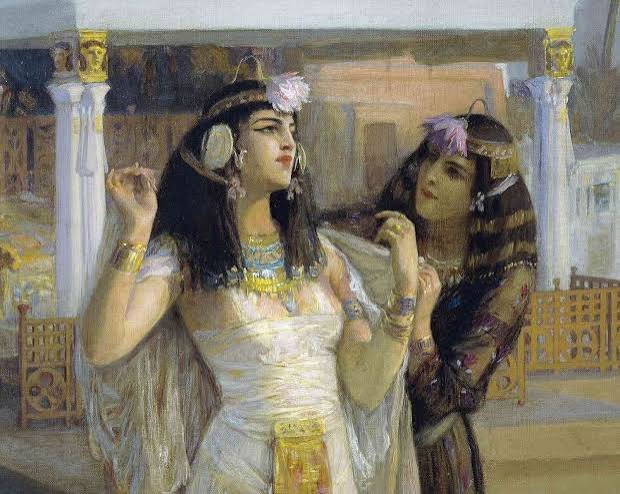
Key Events in Cleopatra’s Reign
Major Military Campaigns
Cleopatra’s reign saw several military endeavors aimed at expanding her influence. She supported Antony in his campaigns against Parthia and sought to fortify Egypt’s military presence. However, these efforts were often overshadowed by the political tensions with Rome, particularly with Octavian, Caesar’s heir.
Economic and Cultural Contributions
Cleopatra’s rule was also marked by economic initiatives that revitalized Egypt. She promoted trade, agriculture, and cultural exchanges, enhancing Egypt’s wealth. The famous city of Alexandria thrived under her patronage, becoming a center for arts and learning. Cleopatra’s legacy as a patron of culture remains significant in the historical narrative.
Downfall and Death
Conflict with Octavian
The relationship between Cleopatra and Antony ultimately drew the ire of Octavian, who saw their alliance as a threat to Roman stability. Octavian’s propaganda painted Cleopatra as a seductress seeking to undermine Rome, rallying public sentiment against her. The political climate turned hostile, leading to inevitable conflict.
The Battle of Actium
The naval Battle of Actium in 31 BC was a decisive confrontation between Octavian’s forces and those of Antony and Cleopatra. Despite their initial confidence, the battle ended in a catastrophic defeat for Cleopatra and Antony. This loss marked the beginning of their downfall, leading to a series of desperate decisions in the aftermath.
Final Days and Legacy
Following the defeat at Actium, Cleopatra and Antony retreated to Egypt, where their situation grew increasingly dire. In 30 BC, as Octavian’s forces closed in, Cleopatra chose to end her life rather than face humiliation. According to legend, she died by allowing a venomous asp to bite her, leaving behind a legacy that would be immortalized in history.
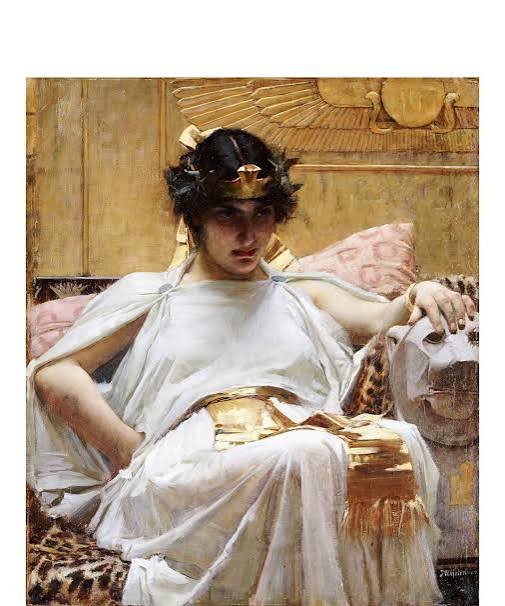
Historical Impact Queen Cleopatra of Egypt
Influence on Rome and Egypt Queen Cleopatra of Egypt
Cleopatra’s life and death had profound implications for both Egypt and Rome. Her alliances and conflicts reshaped the political landscape of the Mediterranean. The fall of the Ptolemaic dynasty paved the way for Egypt to become a Roman province, marking the end of an era.
Cultural Significance in History
Cleopatra’s image has been romanticized throughout history, making her a symbol of beauty, power, and tragedy. Her life has inspired countless works of art, literature, and film, cementing her status as a cultural icon. The complexities of her character continue to intrigue scholars and enthusiasts alike.
Personal Life and Family Queen Cleopatra of Egypt
Marriages and Children
Cleopatra’s relationships were not merely romantic; they were also strategic. She had three known children: Caesarion with Julius Caesar, and Alexander Helios and Cleopatra Selene II with Mark Antony. Her children were central to her political strategy, as she aimed to secure their futures in the shifting tides of power.
Family Dynamics
The dynamics within Cleopatra’s family were often tumultuous. Her siblings were rivals for power, leading to conflicts that would ultimately shape her reign. Cleopatra’s ability to navigate these familial tensions showcased her political acumen and determination.
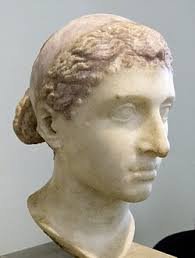
Myths and Misconceptions Queen Cleopatra of Egypt
Cleopatra’s Appearance
One of the most enduring myths about Cleopatra is her beauty. While ancient sources describe her as charming and captivating, they emphasize her intelligence and wit over her physical appearance. Cleopatra’s allure lay in her charisma and ability to engage with powerful men, rather than merely her looks.
Common Myths Surrounding Her Life
Many misconceptions about Cleopatra have emerged over time, often fueled by romanticized portrayals in literature and film. These myths include exaggerated depictions of her relationships and her supposed seduction of powerful men. In reality, Cleopatra was a shrewd ruler who used her relationships to strengthen her position and secure Egypt’s future.
How did Cleopatra die?
Cleopatra died in 30 BC, reportedly by suicide, allowing an asp to bite her, to avoid capture by Octavian’s forces.
Was Cleopatra of Egyptian descent?
No, Cleopatra was of Macedonian Greek descent, belonging to the Ptolemaic dynasty, which ruled Egypt after Alexander the Great.
What role did Cleopatra play in Roman politics?
Cleopatra played a significant role in Roman politics through her alliances with Julius Caesar and Mark Antony, influencing the power dynamics of her time.
How is Cleopatra portrayed in popular culture?
Cleopatra has been depicted in various forms of art, literature, and film, often emphasizing her beauty and romantic relationships, sometimes overshadowing her political acumen.
Why is Cleopatra considered a symbol of power?
Cleopatra is considered a symbol of power due to her ability to navigate the male-dominated political landscape of her time and her significant influence over powerful Roman leaders.
What is Cleopatra’s legacy?
Cleopatra’s legacy is one of intrigue, intelligence, and tragedy, marking her as a pivotal figure in both Egyptian and Roman history, influencing cultural narratives for centuries.
In conclusion, Queen Cleopatra of Egypt remains a fascinating subject of study, embodying the complexities of power, beauty, and tragedy. Her life was marked by ambitious alliances and dramatic conflicts that ultimately led to her downfall. Cleopatra’s legacy continues to captivate audiences, reminding us of the extraordinary role she played in shaping the history of Egypt and Rome. As we reflect on her story, we are invited to explore the nuances of her character beyond the myths, recognizing her as a formidable leader in a tumultuous era. For more insights into historical figures like Cleopatra, continue your exploration of ancient history and its remarkable narratives.


